by Joseph Garnett | Oct 1, 2018 | Copyeditng

Edited by Joseph Garnett, Jr.
What is a 170 Exchange?
The 170 Exchange, also known as a Bargain Sale, was created by Congress and is overseen by the IRS. A 170 Exchange is an IRS-approved transaction that allows a property seller to receive some cash at closing for their property. But more importantly, it enables a seller to save money that’s typically spent on income taxes. How? In addition to cash, the property seller receives a sizable tax deduction from the nonprofit that acquires it.
How is a 170 Exchange different from a traditional sale?
There are two main ways that a 170 Exchange transaction is different from a traditional sale:
- A 170 Exchange uses more than one method to determine the Opinion of Value (the actual worth of the building). A conventional deal will typically set the price of a property based on the value of similar properties nearby. Often, this means that a property will go on the market for less than it is worth.
A 170 Exchange permits appraisal of the building for its “Best and Highest Use.” The process includes three different types of evaluations rolled into one. Once appraised for a 170 Exchange, the property’s value can almost double based on the IRS Publication 561 appraisal methodology.
- In a traditional sale, sellers may pay anywhere from ¼ to almost ½ of their profits from the sale in taxes. In a 170 Exchange transaction, the seller is donating the building to a qualified nonprofit. Instead of paying huge taxes, they receive a significant tax write-off for their property donation.
Where does my nonprofit fit in the process?
170 Exchange transactions require nonprofits to partner with, and that’s where you come in. As a nonprofit, you will never have to put up a single penny on any of these real estate transactions. You may never have to deal with the logistics of the donation or closing. You can either keep the donated property or find a new buyer for the donated property. Most nonprofit partners will opt to have the property resold and receive the net proceeds of the sale.
So what makes a nonprofit a good fit?
The right nonprofit is well established, one whose mission can be supported by the brokerage and their corporate clients. Brokers are looking for diverse nonprofits that support various causes around the US and internationally so that the seller has a broader choice of nonprofits.
So what does the process look like for you as a nonprofit?
A brokerage specializing in 170 Exchange transactions can manage the entire process and provide 100% of the funding needed for acquisition and disposition (selling/renting/disposing of the building) through investors. In many cases, the nonprofit is not responsible for providing or guaranteeing funds. The net proceeds after all expenses, like selling the building, cash put into the deal for the seller, etc.), remain with the nonprofit.
It is that simple. The 170 bargain sale is an excellent opportunity for your nonprofit to participate in the over $8 billion of 170 Exchange transactions that are processed every year.

by Joseph Garnett | Sep 29, 2018 | Copyeditng
IRS Section 170 Bargain Sale and its Conditions
Edited by Joseph Garnett, Jr. – Written by Mike Wolfe
As our regular visitors know already, the 170 Exchange is an amazing transaction by which an investor gets to do a good deed. The investor also cashes in on a dated real estate property’s value and receives a considerable chunk of very real immediate tax rebates. Consequently, the investor helps nonprofit organizations and the entire community. This process is truly an amazing opportunity for all involved. An ultimate win-win situation. It is not enough, however, to find a nonprofit and make the sale. Some conditions must apply for the businessperson to donate to get the tax benefits from the deal. Those conditions are outlined in the IRS Section 170 Bargain Sale, also known as the 170 Exchange.
To execute an IRS Section 170 Bargain Sale, certain conditions must be met. Conditions such as the seller must have a significant tax liability, and the buyer must be a nonprofit.
The Specifics of an IRS Section 170 Bargain Sale
The general outline of the deal is simple – a commercial real estate owner sells a piece of the property below its fair and full market value to a charitable organization. The difference between the sale price and total property value is the sum to be deducted from the donor’s income.
But there is more that needs to understand about the IRS Section 170 Bargain Sale. First, there is a list of commercial properties that can be a part of the 170 Exchange. Then there is the value assessment, which will be influenced by things like mortgages attached to the property, which will reduce the amount you can claim for the rebate.
Additionally, the entrepreneur should have a sufficient level of taxable income to qualify. There is also a list of federally recognized 501(c)(3) entities, which are the only nonprofits allowed to participate in the 170 Exchange transaction on the buyer side. Finally, there should be two appraisals—one by an MAI Designated appraiser to evaluate it conducted within 60 days of the sale.
The Benefits of an IRS Section 170 Bargain Sale
Its incomparable benefits dictate the restrictions on the deal. Unlike the 1031 Exchange, the 170 Exchange offers not a deferral of taxes but an immediate rebate on the donated sum. Moreover, there is a significant chance of significant tax deductions from the Exchange for up to 5 years. The deduction, in addition to the immediate tax gain for sale.
Conclusion
If you want to learn more about this fantastic transaction, you came to the right place. We at The Welfont Group specialize in connecting entrepreneurs with nonprofits for this purpose. Ours is a long-standing record of excellence and diligent service. We help business people and nonprofits connect and benefit from each other and the entire community. Whether you are a commercial real estate owner wanting to donate or a nonprofit looking for donations, call us now, and we will be glad to assist you.
by Joseph Garnett | Jun 15, 2018 | blogging
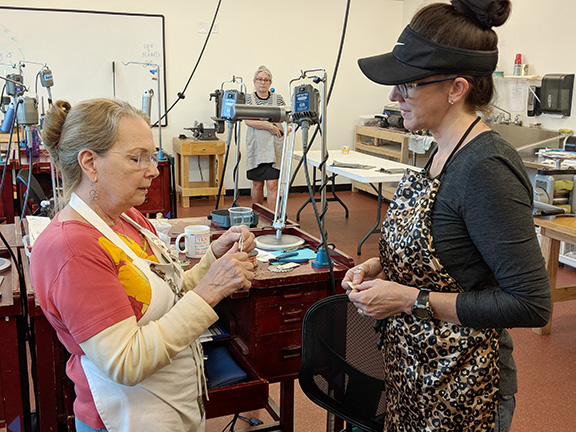
A Child’s Curiosity and Falling in Love with Silversmithing
For DFAC instructor Susan Maxon, the allure of fire, twisting metal, and acid captivated her four-year-old imagination. This instant love for silversmithing led to a lifetime of opportunities for both working and teaching the art of jewelry making. In the following video, Maxon expresses her joy for the art and how then shares that feeling with her students.
Discover Your Passion in Our Jewelry Shop
Whether you are a beginner or have some experience with jewelry making, DFAC offers classes that can help you improve your craftsmanship. Please click here to learn about the many opportunities available for you to express yourself.

by Joseph Garnett | Jun 15, 2018 | blogging
Since 1988, when Motorola first introduced the large brick mobile phones, voicemail has been part of the standard calling package. Between then and now, most small business owners have been using cell phones to communicate with customers.
According to Pew Research, 91 percent of adults use cell phones as part of their daily routines. Google has also reported that the majority of Americans use their smartphones to researching businesses. Although there have been considerable changes in cell phone use, the use of voicemail has remained virtually stagnant over the same time frame.
Voicemail Statistics
Many small businesses still use cell phone voicemail to connect with customers when they are not available. However, the customer communication environment is changing drastically. In studies done by Forbes and the New York Times, 80 percent of all callers sent to voicemail hang up, and 30 percent of the messages went unchecked for at least three to four days. The lack of communication with these customers could equate to thousands of lost dollars for your business.
Freelancers & Small Businesses
The silent and steady transition in the nation’s workforce has a significant impact on freelancers and solo business owners. The most critical result is competition. Studies show that during the 1990s, more than 15 million freelancers were a part of the workforce. That number is expected to be well over 45 million today as more freelancers and entrepreneurs join the workforce. Some consultants think that number could be around 75 million by 2020.

With competition in the marketplace becoming fierce, owners will begin to realize that using a voicemail system hurts their business profits. The only alternative is to look to an answering service for help.
Your Solution
At AnswerFirst, we are confident that we are your solution to voicemail. Our customer service professionals can work for your company 24 hours a day, seven days a week, every day of the year. You won’t have to worry about losing a potential customer to voicemail ever again.
Whether your business is large or small, we can enable you to become more active and profitable.